
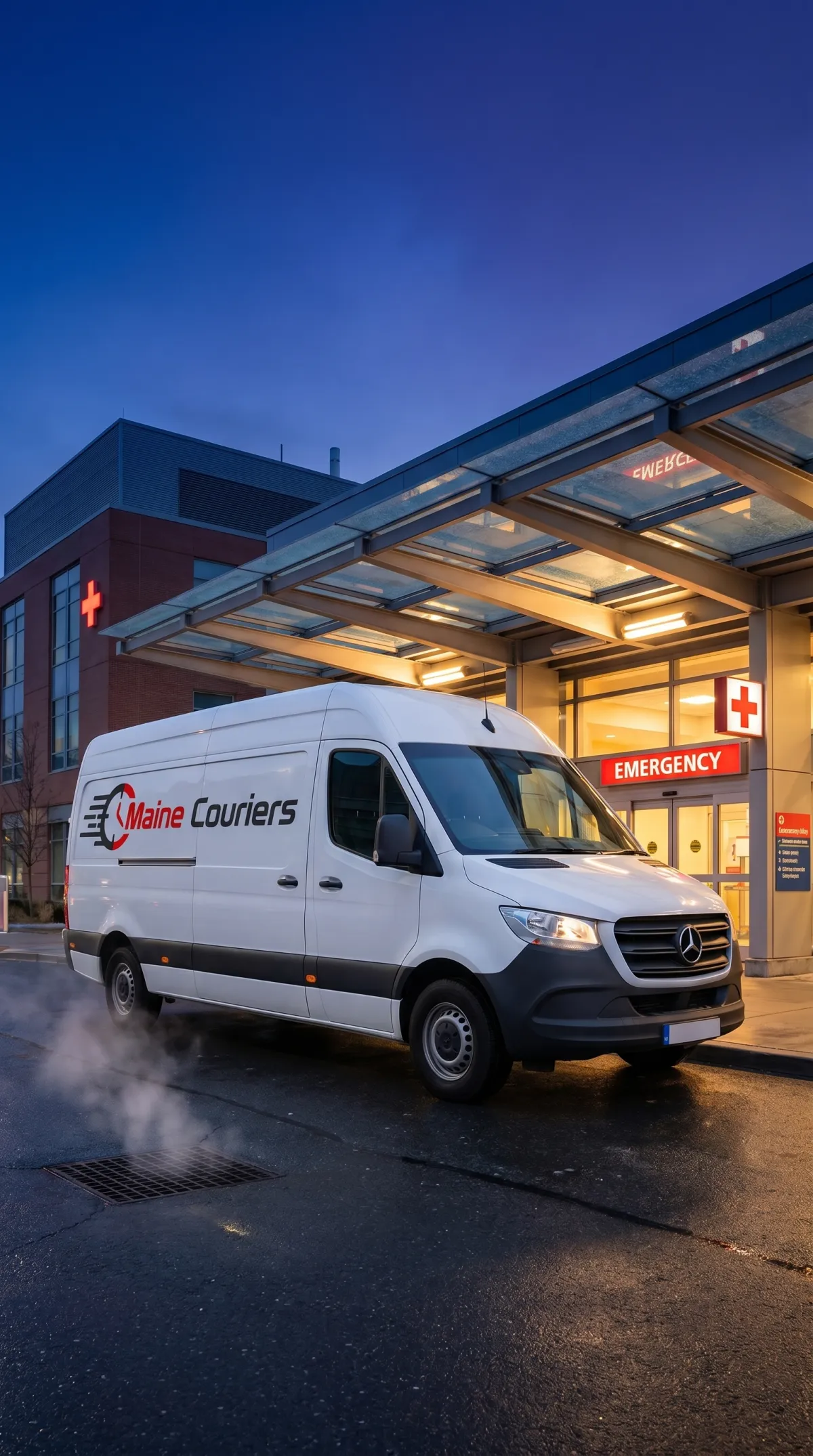
Same Day Medical Courier UK: What to Expect
Medical couriers sit in their own category. Pathology samples, prescription medicines, medical devices, organ transport — these jobs have rules that general parcel networks aren't equipped to follow. Temperature, time, chain of custody, and sometimes regulatory paperwork all matter, and getting any of them wrong can mean a wasted sample, a delayed diagnosis, or a breached compliance requirement.
This article covers what you actually need to know if you're booking same day medical couriers in 2026. NHS trusts, private clinics, GP practices, and diagnostic labs all use these services — here's how to pick well and avoid the common problems.
What 'medical courier' actually covers
The term covers a broader set of jobs than most people expect. On the sample side, it's pathology (blood, tissue, urine) moving between GP practice and lab, histology specimens between hospital and specialist lab, and research samples between clinical trial sites. On the supply side, it's prescription medications, medical devices, dental moulds, and occasionally implantable devices moving to theatre.
Each of these has its own rules. Pathology samples often need to stay at specific temperature ranges (2°C–8°C refrigerated, or −20°C frozen) and maintain sample integrity through transit. Medicines have Controlled Drug rules if they're scheduled. Medical devices destined for theatre need chain of custody. A proper medical courier handles all of these.
Temperature-controlled transport
The single biggest issue with medical couriers is temperature. Many pathology labs quote a 2-hour receipt window for unrefrigerated blood samples; for tissue it can be shorter. If the sample is left in a warm vehicle in July or a freezing one in January, results are unreliable or void.
Ask specifically: is the vehicle temperature-monitored? What's the ambient range in the cargo area? Is there cold-chain packaging available for frozen samples? For most day-to-day pathology work a conditioned van with insulated packaging is fine. For biologics, organ transport, or clinical-trial samples, you need a dedicated cold-chain service with continuous temperature logging.
Chain of custody and documentation
For samples that will be used in legal, forensic, or regulatory contexts (drug screening, trial samples, some NHS work) the chain of custody matters as much as the sample itself. That means: signed handover at collection, tamper-evident packaging, driver ID recorded, time-stamped GPS tracking through the journey, and signed receipt at delivery.
A good medical courier provides a chain-of-custody docket — a physical or digital form that's signed at each handover. If you're handling anything regulated, insist on this. It's not overkill; it's what the regulator expects if they ever audit the workflow.
Controlled drugs and scheduled medications
Scheduled drugs (Schedule 2 controlled drugs in particular) have specific transport rules under UK law. They need to be in secure transit — not left unattended in a vehicle, not transported through a parcel hub, and ideally handled by a driver with a documented CD-handling process.
Most general couriers won't touch CDs. Specialist medical couriers will, but ask specifically: do your drivers hold a DBS check? Do you have a CD transport log? Is the vehicle locked when unattended? These aren't paranoid questions — they're compliance standard. A good answer is matter-of-fact; a bad answer is vague or defensive.
Out-of-hours, nights, and weekends
Medical work doesn't respect office hours. A stroke call for a specialist radiology opinion at 2am, a theatre needing a specific implant at 7pm on a Sunday, a pathology lab cut-off at 6am for next-day results — these are normal.
Check your courier's out-of-hours policy before you need it, not during a crisis. Any provider worth using has a 24/7 rota with dispatch cover, not just a drivers' mobile. The Maine Couriers dispatch line runs 24/7 for medical clients; it should be the same with any specialist medical courier you use.
GP practice to pathology lab: the common workflow
The most routine medical courier job is morning collection from a GP surgery or clinic, delivery to a regional pathology lab. This usually runs on a scheduled contract — same time every morning, same route — rather than per-call. Pricing is per-day or per-month, not per-job, and works out far cheaper than ad-hoc same day.
If your practice doesn't have this set up yet, it's worth doing. The discipline of a regular collection (rather than stacking samples until enough pile up) improves turnaround time on results, which is what patients actually feel. Ask your local medical courier for a scheduled-route quote and compare to what you're paying in ad-hoc jobs.
Private clinics and elective surgery
Private clinics have slightly different needs — often shorter notice, tighter deadlines, and sometimes theatre-delivery for specific implants or prostheses. For these, the courier needs to know the theatre slot, coordinate with the surgical team, and sometimes wait for surgical sign-off before the device can be accepted.
This is specialist work. Not every medical courier will do theatre-delivery routinely. If you run a clinic where this comes up, set up a named contact at a specialist courier rather than booking through a general dispatch line. The time savings are significant when it matters.
What to ask any medical courier before you book
Six questions:
- Are your drivers DBS-checked and trained specifically for medical work?
- Do you offer temperature-monitored transport, and what's the ambient range?
- Will you provide a chain-of-custody docket on request?
- What's your policy on controlled drugs, if we ever need to move them?
- Is dispatch genuinely 24/7 with a live operator, or is it a drivers' mobile?
- What happens if a sample integrity issue arises in transit — incident log, notification process, insurance limit?
Good providers answer these without pause. Weak ones deflect. Pick accordingly.
Internal links — Maine Couriers medical resources
For the full service description see medical courier service. Industry-specific information is on the healthcare industry page and the pharmaceutical industry page. For nearby cities we cover frequently: Coventry, Birmingham, Leicester, Nottingham.
Booking a same day medical courier?
Maine Couriers handles pathology, prescription, and medical device transport across the UK. 24/7 dispatch and chain-of-custody paperwork as standard. Quote in the form or call the office to discuss your specific workflow.
Request Your Quote Today