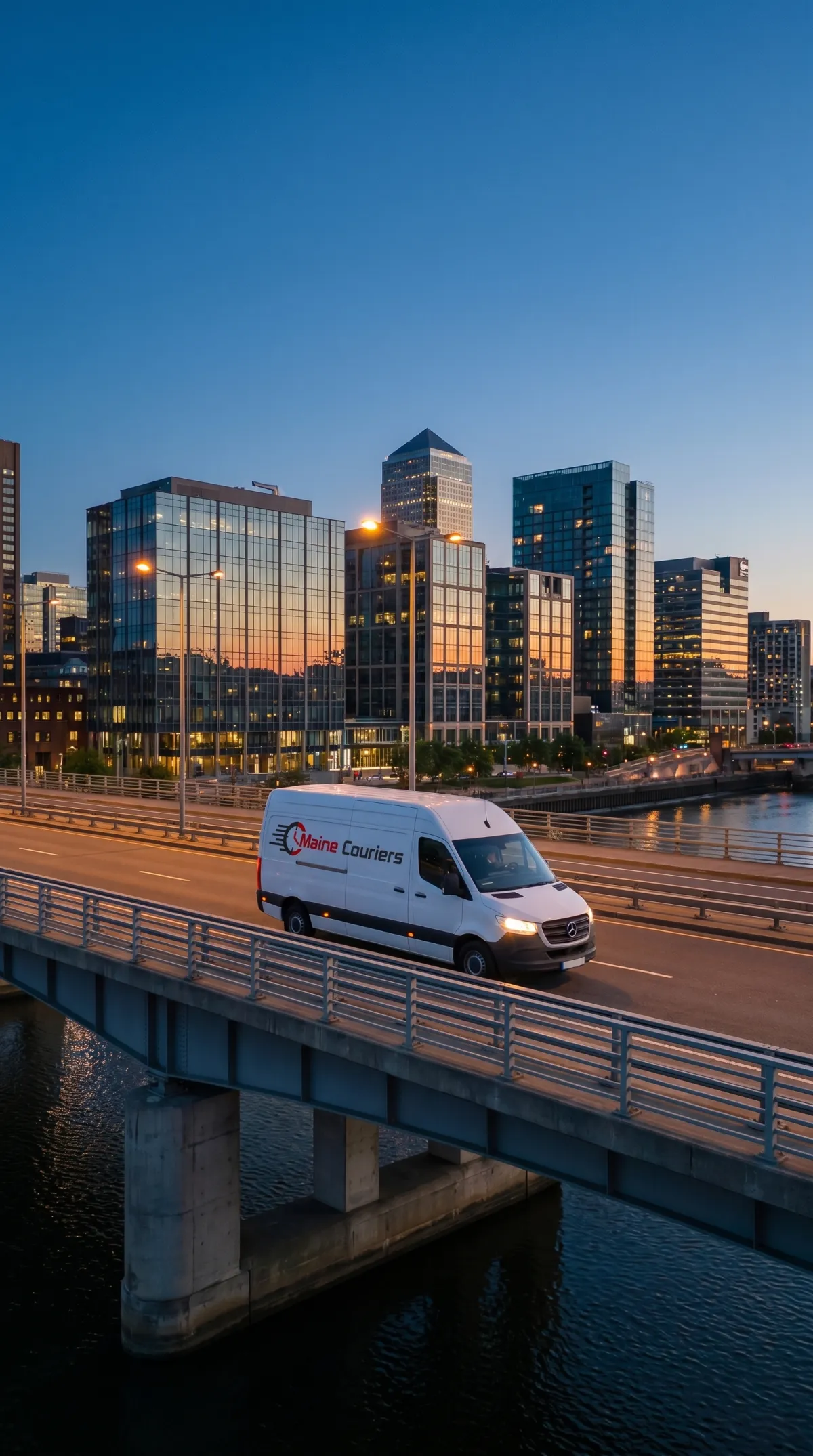
Urban last-mile delivery—the final journey from distribution centres to customers' homes—presents one of the most complex challenges in modern logistics. It's simultaneously the most expensive segment of the supply chain and the most visible to customers, making it a critical differentiator for courier companies. As UK cities become increasingly congested, environmental regulations tighten, and customer expectations for rapid delivery grow, the last-mile delivery landscape is undergoing profound transformation. This article explores emerging innovations reshaping how packages reach urban customers over the coming years.
The Last-Mile Challenge in Urban Environments
Urban delivery presents unique difficulties. Dense city centres create traffic congestion that unpredictably extends delivery windows. Congestion charges and low-emission zones restrict vehicle access to certain areas during specific times. Limited parking forces drivers to leave vehicles unattended whilst making deliveries, increasing theft and parking fine risks. High-rise apartment buildings with security entry systems slow access. Customer unavailability remains a major challenge, particularly in densely populated areas where delivery time windows are narrow.
These challenges escalate as e-commerce demand drives exponential growth in delivery volumes. Cities struggle accommodating the surging number of delivery vehicles. Traditional courier models—large vans making sequential stops—prove increasingly inefficient in congested environments. The future of urban delivery requires innovation addressing these multifaceted challenges simultaneously: reducing traffic impact, improving efficiency, maintaining reliability, and controlling costs.
"The courier companies that thrive in tomorrow's UK cities won't necessarily be the largest. They'll be the most innovative—those embracing new technologies, sustainable solutions, and novel delivery models that work with urban constraints rather than against them."
Micro-Mobility Solutions and Urban Consolidation
Electric cargo bicycles and cargo e-scooters are emerging as game-changing solutions for dense urban delivery. These vehicles access congested city centres easily, produce zero emissions, require minimal parking space, and operate silently. They're ideal for delivering multiple light packages across city neighbourhoods—precisely the volume most couriers handle daily. Companies across London, Manchester, and Birmingham already deploy cargo bikes extensively, delivering significant package volumes without adding traffic or pollution.
Urban consolidation centres—small warehouses positioned at city peripheries—complement micro-mobility solutions. Rather than large delivery vans entering congested city cores, packages are consolidated at peripheral facilities, then distributed using cargo bikes and scooters for final delivery. This model dramatically reduces traffic while maintaining rapid delivery times. Some consolidation centres employ sophisticated robotics, automating package sorting and organisation, improving efficiency further.
Autonomous Delivery and Robotics
Autonomous delivery robots—small wheeled devices navigating pavements independently—are moving from experimental trials into operational deployment across UK cities. These robots handle light package delivery perfectly, operating 24/7 without driver fatigue concerns, and generating no emissions. Several UK cities are granting operating permits for autonomous delivery trials, recognising their potential to reduce traffic and improve service availability.
Autonomous delivery complements human couriers rather than replacing them. High-density apartment areas, congested shopping districts, and university campuses suit autonomous operations. Complex deliveries, heavy items, and situations requiring human judgment still require human couriers. This complementary approach optimises resource allocation, deploying human couriers where their skills matter most and automating routine operations.
Locker Networks and Alternative Delivery Points
Customer unavailability drives failed deliveries and adds delivery costs. Parcel locker networks—secure automated lockers positioned in city-centre locations—enable customers to collect packages at convenient times. Some systems integrate with retail locations; customers collect parcels whilst shopping. Others employ standalone lockers in city centres, train stations, or convenience stores. This model suits urban customers preferring collection to home delivery.
Similarly, neighbourhood pickup points—small shops or facilities accepting parcel delivery—reduce failed deliveries significantly. Customers receive notification when parcels arrive at convenient local pickup locations. This model particularly suits densely populated areas where delivery windows are tight and customer schedules unpredictable. Many fast-fashion retailers now operate similar models, proving customer acceptance of alternative delivery points.
Smart Delivery and Real-Time Optimisation
Real-time traffic data, AI-powered routing, and dynamic delivery window management enable dramatic efficiency improvements. Rather than predetermined delivery routes, systems continuously analyse traffic conditions, re-optimising routes to avoid congestion. If traffic unexpectedly develops, the system automatically adjusts subsequent stops. If certain customers are unavailable, the system reschedules delivery to alternative time windows communicated to customers instantly.
IoT-enabled package sensors provide unprecedented visibility. Packages report temperature, humidity, movement, and location continuously. If a package is delayed, customers receive immediate notification and accurate revised delivery estimate. This transparency builds customer confidence and reduces anxious enquiries.
Sustainability and Environmental Compliance
Environmental regulations increasingly mandate low-emission delivery. Many UK city centres already restrict diesel-only vehicles. Within a decade, comprehensive zero-emission zones will likely cover all major city centres. Courier companies transitioning now to electric vehicles gain competitive advantages. Battery technology improvements have made electric vehicle range adequate for urban operation. Charging infrastructure expansion, though still progressing, increasingly supports fleet electrification.
Electric vehicles alone won't suffice long-term. True sustainability requires reducing delivery volumes through improved distribution efficiency, consolidating shipments, and enabling customers to accept bundled deliveries reducing frequency. These systemic changes require courier company and customer collaboration, shifting expectations around delivery frequency and timing.
The greenest delivery is one that doesn't happen. Consolidating multiple shipments into single deliveries, implementing locker networks reducing failed attempts, and enabling customers to receive packages less frequently creates environmental benefits exceeding any vehicle emission improvements alone.
Integrated Multi-Modal Networks
The future's most effective urban delivery systems won't rely on single approaches. Instead, they'll employ integrated networks combining traditional vans for larger items, cargo bikes for light packages, locker networks for collection-preference customers, and autonomous robots for specific routes. This "network orchestration" optimises resource allocation, deploying each solution where it works best.
Achieving this requires sophisticated logistics platforms managing multiple delivery modalities, coordinating handoffs between systems, and optimising overall network efficiency. Companies investing in these integrated platforms will outcompete traditional single-solution providers.
Conclusion: Embracing Urban Logistics Evolution
The future of UK urban last-mile delivery will be unrecognisably different from today's model. Cargo bikes, autonomous robots, locker networks, and sophisticated AI optimisation will complement traditional couriers, creating efficient, sustainable, resilient delivery ecosystems. Courier companies embracing innovation, investing in new technologies, and reimagining delivery models for urban constraints will thrive. Those clinging to conventional approaches will struggle as cities become more hostile to traditional delivery vehicles. The transformation is already underway in forward-thinking urban centres. The question for courier companies isn't whether this future arrives—it's how quickly they can innovate to lead it rather than react to it.
Leading Urban Delivery Innovation
Maine Couriers embraces innovative delivery solutions for modern UK cities. Discuss how we can optimise your urban delivery needs.
Get a Quote