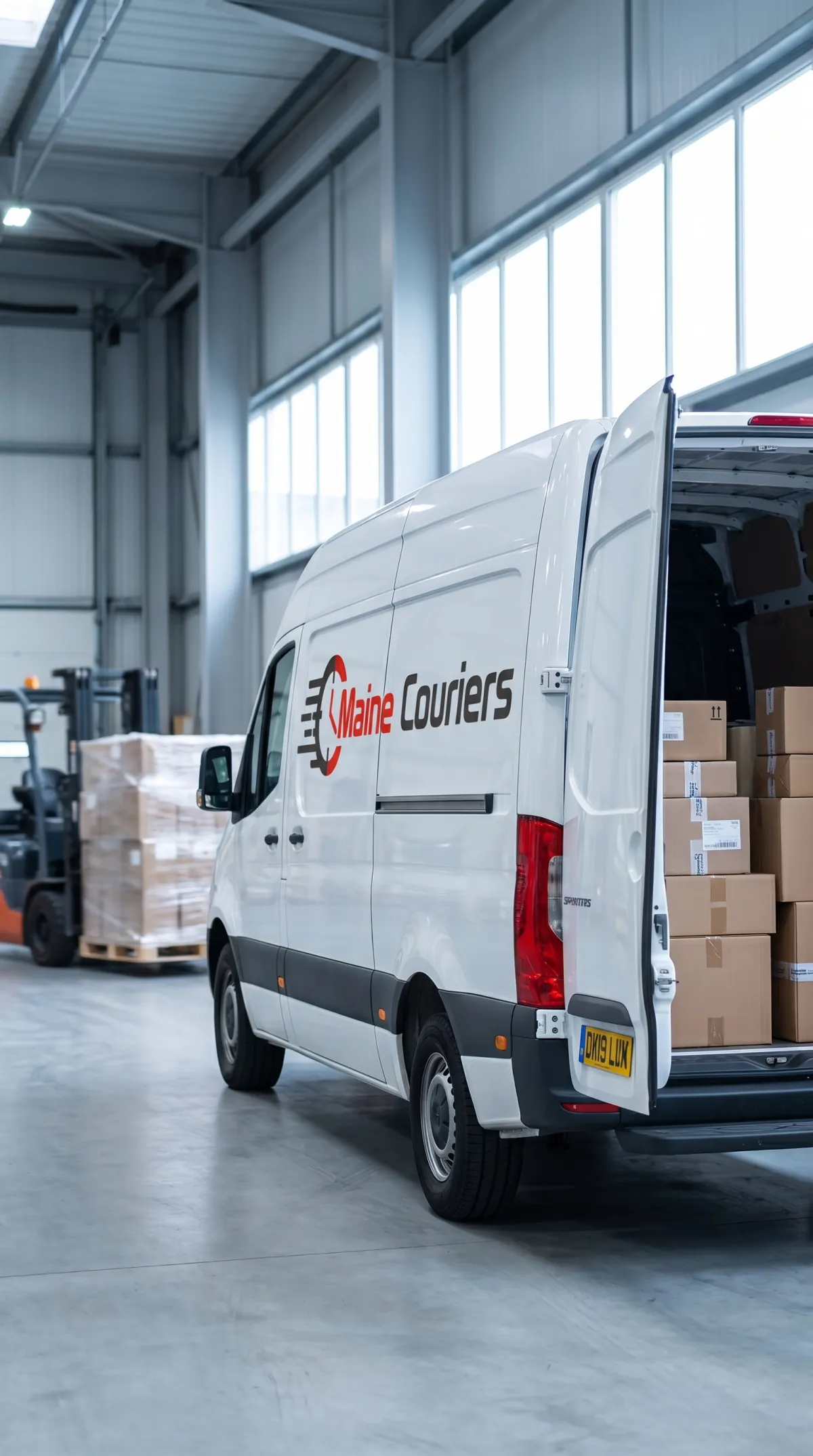
The warehouse-to-door supply chain represents the final and most visible stage of product delivery. From warehouse shelves to customer doorsteps, this journey determines customer satisfaction, influences return rates, and significantly impacts operating margins. Yet many businesses approach warehouse-to-door logistics as fragmented activities—warehouse operations, transport, and delivery separate departments with disconnected objectives. Modern distribution strategy integrates these functions, recognising that warehouse efficiency impacts delivery performance, and delivery reliability impacts customer perception of warehouse quality. Businesses streamlining warehouse-to-door operations achieve dramatic cost reductions, faster delivery, improved quality, and enhanced customer satisfaction. Understanding how to integrate these functions creates competitive advantage unavailable to fragmented competitors.
Integrated Warehouse-to-Door Planning
Effective distribution strategy begins with recognising how warehouse and delivery operations interconnect. Warehouse output formats impact delivery efficiency. Products packed for convenience during warehouse operations may complicate courier delivery. Orders consolidation strategies that reduce warehouse processing time might prevent delivery route optimisation. Shipping documentation prepared for internal warehouse convenience might create customs delays. These interdependencies remain invisible in fragmented organisations but create massive efficiency losses in integrated analysis.
Streamlined warehouse-to-door planning aligns warehouse processes with delivery requirements. Order packing follows courier preferences rather than purely warehouse convenience. Staging areas position orders for efficient courier collection. Delivery windows determine warehouse processing schedules. This integration eliminates handoff inefficiencies where warehouse output cannot efficiently move through delivery operations. Companies implementing integrated planning report 15-25% improvements in overall cycle time, with significant cost reductions from eliminated inefficiencies. The coordination requires cross-functional communication and organisational flexibility, but the efficiency gains prove substantial.
Inventory Management and Delivery Optimisation
Inventory distribution strategies significantly impact delivery performance. Centralised warehouses reduce inventory costs but increase delivery distances and times. Decentralised networks with multiple smaller facilities enable faster delivery but increase operational complexity and costs. Optimal strategies often involve tiered networks—large central facilities for bulk storage, regional distribution centres for faster delivery to local markets. This network design requires balancing inventory costs, facility expenses, transport costs, and delivery speed performance.
Strategic inventory placement near high-demand areas enables faster delivery without excessive inventory investment. Demand forecasting combined with geographic analysis identifies optimal facility locations. Some companies maintain smaller "last-mile" inventory nodes—microfulfilment centres in urban areas enabling same-day or next-day delivery capability impossible with centralised distribution. Amazon exemplifies this strategy with hundreds of facilities enabling rapid delivery. Smaller companies adopting scaled versions of this approach through partnerships with 3PL providers achieve comparable speed advantages.
"Companies that view warehouse and delivery operations as integrated systems rather than separate functions consistently achieve 20-30% cost reductions and dramatically faster delivery times compared to fragmented competitors."
Packaging and Logistics Coordination
Packaging decisions made for warehouse protection and shelf appeal often complicate delivery. Oversized packaging requiring courier vehicle space increases transport costs and carbon footprint. Complex packaging slows courier handling, increasing delivery times. However, light protective packaging risks customer damage and returns. Optimal strategies balance protection, weight, courier handling efficiency, and customer unboxing experience. Cross-functional teams including warehouse, courier, and customer experience representatives define packaging standards optimising across all concerns.
Sustainable packaging increasingly influences this coordination. Recyclable, compostable, and minimal materials reduce environmental impact whilst often lowering costs. Courier networks increasingly implement sorting facilities enabling package consolidation, benefiting from lightweight packaging that reduces transport costs proportionally. Companies adopting sustainable packaging report customer appreciation, cost reductions, and competitive differentiation. The warehouse-to-door perspective enables identifying how packaging impacts every supply chain function, informing better decisions than warehouse-only optimisation.
Technology Integration and Data Visibility
Modern warehouse management systems (WMS) and transport management systems (TMS) should integrate seamlessly, providing end-to-end visibility. When systems are disconnected, information passes through manual steps—orders picked in WMS, information manually entered into TMS, delivery confirmed manually back to WMS. This disconnection creates errors, delays, and duplicated effort. Integrated systems provide real-time visibility—orders picked flow automatically to courier systems, delivery confirmations feed immediately into inventory updates. This integration eliminates manual steps and provides customers with accurate tracking throughout the journey.
Data integration additionally enables optimisation impossible with disconnected systems. Real-time inventory visibility combined with courier capacity allows dynamic order routing—directing high-priority orders toward fastest couriers, batching orders efficiently through available capacity. Delivery timing patterns combined with warehouse data enable forecasting demand spikes and increasing warehouse staffing before shortages occur. This analytical capability creates responsiveness and efficiency that fragmented systems cannot match.
Last-Mile Delivery Strategy and Options
Final-mile delivery represents the most expensive and customer-visible supply chain segment. Strategic options include traditional courier delivery, customer collection from retail locations, locker-based delivery, and emerging alternatives including drones and autonomous vehicles. Each option involves different cost structures, service levels, and customer preferences. Optimal strategies often combine multiple approaches, enabling customers to select preferred delivery methods. Customers valuing speed accept premium pricing for courier delivery. Price-sensitive customers utilize slower, cheaper options. Retail collection offers convenience for some, avoiding delivery costs.
Advanced companies implement "click and collect" models enabling customers to receive online orders at retail stores, increasing retail foot traffic whilst reducing delivery costs. Digital lockers in urban areas enable package collection at customer convenience. Subscription services offering unlimited free delivery create customer loyalty and reduce price sensitivity. These diversified approaches require complex coordination between warehouse, retail, courier, and customer systems, but create competitive advantage unavailable to simple courier-only operations.
Reverse Logistics and Returns Management
Complete warehouse-to-door strategy encompasses returns management and reverse logistics. Customer returns create supply chain complexity—products must be received, inspected, restocked or discarded, and inventory systems updated. Poor reverse logistics create customer dissatisfaction and lost revenue. Strategic approaches simplify returns, reducing friction and improving customer experience. Some companies provide pre-printed return labels with orders, enabling simple customer initiations. Others maintain local return centres, accepting returns at retail stores alongside forward delivery. Courier providers can facilitate returns through pickup scheduling with delivery drivers.
Reverse logistics data provides valuable insights. Analysis of return reasons identifies product quality issues, packaging problems, or customer expectation misalignment requiring attention. Returns patterns by location or product guide warehouse stocking strategy. Efficient reverse logistics recapture value from returns whilst gathering intelligence improving forward operations. Companies viewing returns as waste versus strategic learning opportunity miss opportunities for continuous improvement.
Performance Measurement and Continuous Improvement
Effective warehouse-to-door strategy requires comprehensive metrics spanning entire supply chain. Traditional warehouse metrics—processing time, accuracy, cost per unit—optimise warehouse performance in isolation. Traditional delivery metrics—on-time delivery, cost per package—optimise logistics independently. Integrated metrics focus on end-to-end performance—total cycle time from order to delivery, cost to fulfil complete customer order, customer satisfaction, total cost as percentage of order value. These integrated metrics drive aligned optimisation across functions.
Continuous improvement processes including regular performance reviews, process analysis, and systematic enhancement ensure ongoing optimisation. Lean methodologies, Six Sigma approaches, and continuous improvement cultures drive incremental enhancements compounding over time. Regular communication between warehouse, logistics, and courier teams identifies inefficiencies and improvement opportunities. Companies that embed continuous improvement into culture consistently outperform those viewing operations as static systems requiring only occasional optimisation.
Conclusion: Strategic Integration Drives Competitive Advantage
Warehouse-to-door supply chain excellence requires integrating traditionally separate functions around common objectives. Fragmented warehouse and delivery operations inevitably create inefficiencies, slower cycles, and higher costs. Integrated strategies aligning processes, technology, performance metrics, and organisational incentives unlock efficiencies unavailable to traditional approaches. The investment in integration—cross-functional teams, technology systems, process redesign—proves substantial, but the competitive advantages—lower costs, faster delivery, higher quality, superior customer satisfaction—justify investment many times over. For businesses building competitive advantage through operational excellence, warehouse-to-door integration represents essential strategic priority rather than tactical optimisation.
Optimise Your Distribution Network
Maine Couriers integrates seamlessly with warehouse operations to streamline warehouse-to-door delivery. Efficient, reliable, customer-focused logistics solutions.
Get a Quote