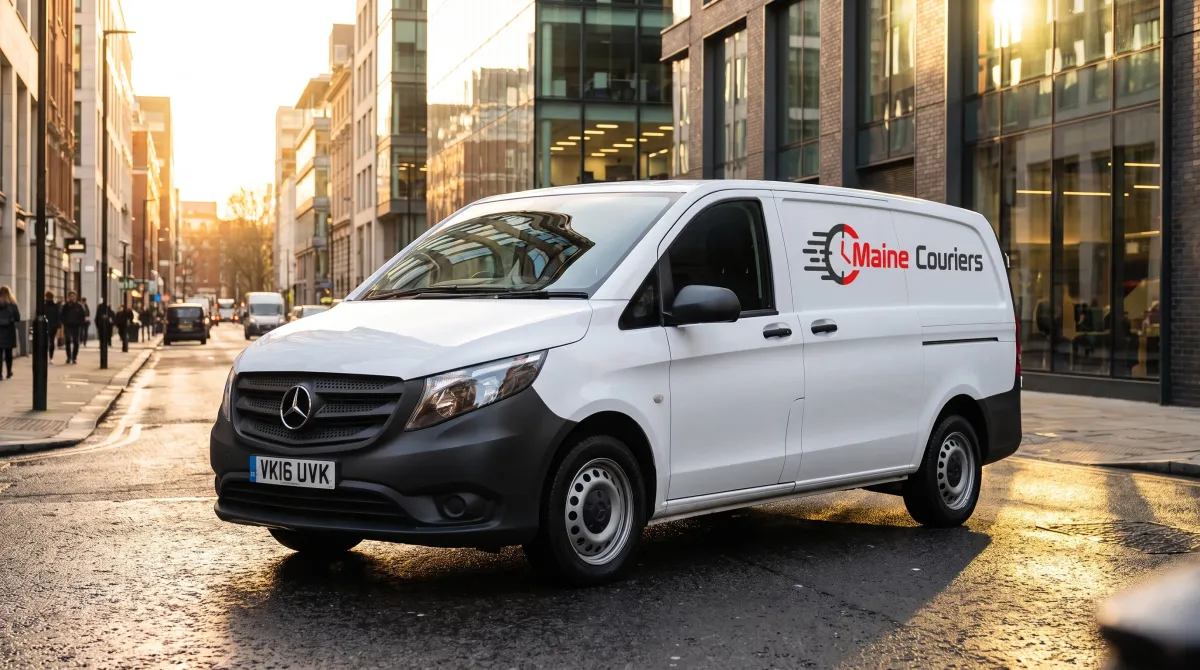
UK Clean Air Zones (CAZs) represent a revolutionary intervention in urban air quality management, fundamentally reshaping how courier services operate in major cities. These zones restrict entry of polluting vehicles, requiring operators to either upgrade to cleaner vehicles or pay daily fees. Currently active in Bristol, Birmingham, Leeds, and Greater Manchester, with plans for expansion, CAZs create urgent operational challenges and opportunities for courier services. Understanding CAZ regulations, their impacts on delivery operations, and strategies for compliance has become essential for logistics companies operating in affected urban areas. The transition will require significant capital investment but ultimately positions early adopters as competitive leaders.
Understanding Clean Air Zone Regulations
Clean Air Zones operate through vehicle compliance tiers based on emissions standards. The most stringent restrictions typically ban pre-Euro 6 diesel cars and vans, pre-Euro 6 heavy goods vehicles, and buses not meeting specified emissions standards. Companies operating non-compliant vehicles within CAZs face daily charges—typically £7-50 per vehicle depending on vehicle type and zone strictness. Some businesses operate multiple vehicles across affected zones, accumulating substantial daily charges that create powerful economic drivers toward fleet modernisation.
Importantly, CAZ regulations vary between zones. Bristol's zone prohibits pre-Euro 6 diesel cars and vans from 10am-4pm weekdays. Birmingham's zone, larger and more restrictive, encompasses greater areas with stricter operational windows. Leeds and Greater Manchester zones follow similar patterns with local variations. Understanding specific requirements for each affected zone is essential for multisite operations. Failure to comply results not just in daily charges but potential vehicle impounding and enforcement action. Many courier companies initially underestimated compliance complexity, discovering only after operations commenced that their assumptions about applicable regulations were incorrect.
Impact on Courier Fleet Operations
For courier companies, CAZs create immediate operational challenges. A company operating a fleet of primarily Euro 5 diesel vans discovers many vehicles non-compliant, generating daily charges. The typical response involves fleet modernisation—replacing older vehicles with Euro 6 compliant models. However, vehicle replacement creates capital investment demands of £20,000-50,000+ per vehicle, stretching cash flow and balance sheets. A company operating 20 vans might face £100,000-200,000+ investment requirements to achieve full compliance.
Alternatively, companies can route around CAZs, avoiding affected zones entirely. However, this approach adds delivery distance, increases travel time, and degrades service levels for customers within zones. Long delivery windows become necessary to accommodate necessary routing detours. Customer satisfaction suffers. Overnight operations in some zones might become more economical, exploiting less restrictive nighttime restrictions. Each approach involves trade-offs between capital investment, operational efficiency, and customer service quality. Most professional couriers ultimately embrace modernisation, recognising that fleet upgrade investment improves profitability beyond just CAZ compliance.
"Clean Air Zones are accelerating UK courier fleet electrification. Companies embracing the transition early position themselves as environmental leaders whilst capturing cost advantages from lower fuel and maintenance expenses that offset vehicle investment over time."
Electric and Alternative Fuel Vehicles
CAZs create powerful incentives driving adoption of zero-emission vehicles. Modern electric vans like the Nissan e-NV200, Mercedes eVito, and Ford e-Transit provide viable alternatives to traditional diesel, offering comparable cargo capacity and range for urban operations. Charging infrastructure expansion, supported by government incentives, increasingly makes electric vehicles practical. Leasing options for electric vehicles reduce upfront capital requirements, spreading costs across vehicle lifecycles. Grants and subsidies from various schemes support transition costs, reducing net investment requirements.
Beyond electric vehicles, alternative fuels including hydrogen fuel cells, compressed natural gas (CNG), and hybrid systems provide compliance pathways. Each technology offers trade-offs—electric vehicles excel in urban operations with daily charging access but struggle with long-range requirements; hydrogen vehicles offer range but limited fuelling infrastructure; hybrids provide flexibility but higher maintenance complexity. Smart courier operators evaluate their specific operational requirements and select appropriate technologies. Many adopt multi-technology approaches, operating electric vehicles for routine urban deliveries and alternative fuel vehicles for longer-range work.
Competitive Advantage and Market Differentiation
Couriers achieving early CAZ compliance position themselves advantageously against competitors. Customers increasingly prioritise environmental responsibility and may actively select suppliers demonstrating sustainability commitment. A zero-emission delivery fleet becomes powerful marketing differentiation, enabling premium positioning and customer acquisition. Enterprise customers managing their own carbon footprints increasingly demand that supply chain partners operate sustainably. Early compliance demonstrates commitment, securing customer loyalty and justifying premium pricing.
Operational efficiency improvements from fleet modernisation create additional competitive advantages. Electric vehicles provide lower operating costs—electricity typically costs 60-70% less than diesel per mile. Maintenance costs decrease dramatically—no oil changes, spark plugs, or transmission fluid. Electric vehicles' immediate torque and smooth power delivery improve delivery speed, reducing per-delivery times. These efficiency improvements, compounding across fleet operations, create cost structures that non-compliant competitors cannot match. What appeared initially as regulatory burden transforms into genuine competitive advantage.
Logistics Network Restructuring
CAZs incentivise redesign of logistics networks. Rather than operating single distribution centres with delivery vehicles entering zones directly, many couriers establish consolidation hubs outside zones. Goods transferred from long-haul vehicles to small electric vans for final-mile delivery within zones. This approach optimises vehicle utilisation—long-haul diesel vehicles operate outside CAZs where efficient; electric vehicles focus on final-mile urban work where they excel. Slightly longer overall transit times often prove acceptable in exchange for improved cost efficiency and environmental performance.
Regional specialisation becomes more pronounced. Couriers developing specific expertise serving CAZ-affected areas achieve operational scale justifying infrastructure investment. Specialists operating entirely within zones can operate small electric fleets optimally. Generalists struggling to operate across mixed geographies face ongoing compliance challenges. Industry consolidation may accelerate as smaller couriers struggle with transition costs, eventually selling to larger providers with capital and expertise to navigate CAZ complexity.
Customer Communication and Service Evolution
Transparent communication about CAZ impacts helps customers understand operational changes. Delivery timeframes may expand slightly due to route modifications. Pricing may increase reflecting vehicle modernisation investments. However, emphasising environmental benefits, reduced local air pollution, and customer contributions to healthier communities creates positive framing. Many customers enthusiastically support delivery from zero-emission vehicles, viewing it as personal contribution to environmental improvement.
Progressive couriers leverage CAZ compliance for marketing advantage. Promoting "certified zero-emission delivery networks" or "CAZ-compliant sustainable logistics" differentiates service offerings. Customer requests for sustainable options, previously rare, increasingly influence purchasing decisions. By embracing CAZ requirements rather than resisting them, forward-thinking courier companies transform regulatory compliance into customer value propositions and market differentiation opportunities.
Future Expansion and Long-Term Implications
Current CAZ implementations represent early stages of broader urban air quality management strategies. Government discussions continue regarding potential expansion to additional cities and tightening of existing requirements. Industry expectations suggest that CAZs eventually expand to most major UK cities. Additionally, proposed Ultra-Low Emission Zones (ULEZs) impose even stricter requirements, potentially banning older Euro 6 vehicles in future. Early compliance positioning couriers advantageously regardless of regulatory evolution, whilst non-compliant operators face repeated crisis management.
Long-term implications point toward fully zero-emission urban delivery. Current CAZs represent transition mechanisms; future targets likely include complete elimination of emissions from urban goods movement. Couriers embracing fleet electrification and alternative technologies today effectively position themselves for this inevitable transition. The companies investing now will possess operational experience, supply relationships, and competitive advantage when zero-emission requirements become universal.
Conclusion: Regulatory Drivers as Industry Transformation Catalysts
Clean Air Zones initially appeared as burdensome regulatory obstacles, but increasingly couriers recognise them as beneficial transformation catalysts. Fleet modernisation drives operational efficiency improvements, reduces costs, and provides environmental benefits exceeding regulatory compliance requirements. Customers embrace sustainability commitment demonstrated by zero-emission delivery networks. Competitors slow by balancing regulatory compliance with cost constraints; progressive couriers thrive by investing confidently in fleet transformation. Rather than viewing CAZs as problems requiring workarounds, forward-thinking logistics providers view them as opportunities for competitive differentiation and operational improvement. The courier companies embracing CAZ requirements today will be the industry leaders of tomorrow.
CAZ-Compliant Courier Services
Maine Couriers operates sustainable, zero-emission delivery networks fully compliant with UK Clean Air Zones. Reliable, eco-friendly urban deliveries.
Get a Quote