
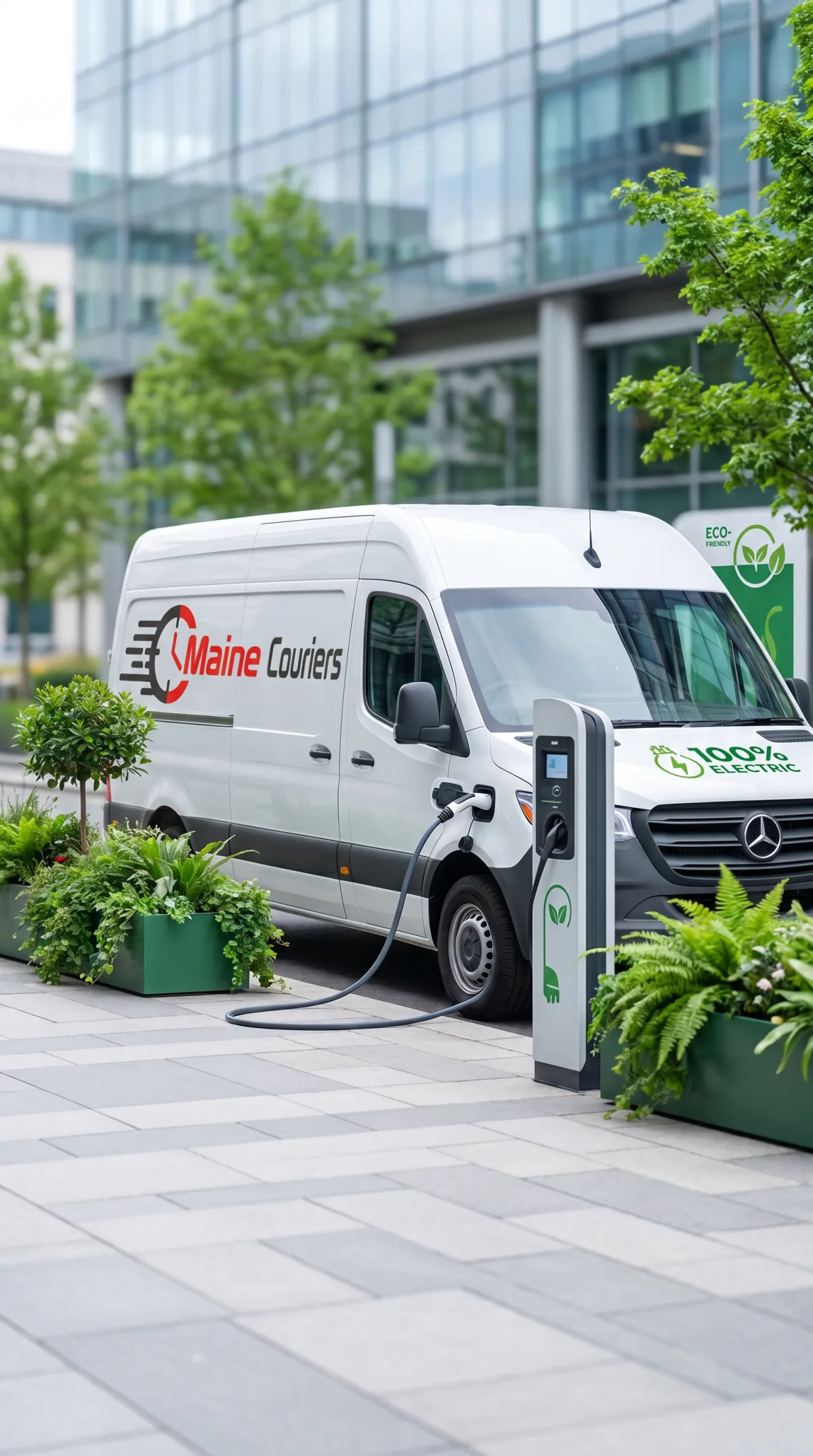
The Rise of Electric Vehicles in UK Courier Fleets
The Electric Revolution in Logistics
The courier and logistics industry stands at a pivotal crossroads. Traditional diesel and petrol-powered delivery vehicles have dominated UK roads for decades, but the landscape is changing rapidly. Electric vehicles (EVs) are no longer a futuristic concept—they're becoming an operational reality for forward-thinking courier companies across the UK, including Maine Couriers, which is investing in sustainable delivery solutions.
The transition to electric courier fleets represents one of the most significant shifts in logistics since the invention of the motorised van. This transformation is driven by a combination of regulatory pressure, environmental responsibility, cost economics, and changing customer expectations. Understanding this evolution is crucial for businesses that depend on reliable courier services in 2025 and beyond.
Environmental Impact and Carbon Reduction
The environmental case for electric couriers is compelling and increasingly urgent. Traditional delivery vehicles contribute significantly to urban air pollution and greenhouse gas emissions. A single diesel van can produce harmful nitrogen oxides and particulate matter that damage public health and contribute to climate change. Electric couriers eliminate these harmful emissions entirely, producing zero tailpipe pollution.
For UK businesses concerned about their environmental footprint—a growing priority in 2025—choosing a courier service that utilises electric vehicles represents a direct way to reduce carbon emissions in their supply chain. This aligns with corporate sustainability goals and demonstrates genuine commitment to environmental responsibility to increasingly conscious customers.
- Zero tailpipe emissions reduce urban air pollution
- Significantly lower lifecycle carbon emissions compared to fossil fuel vehicles
- Contributes to UK government climate commitments and Net Zero targets
- Supports local air quality improvement, particularly in urban delivery zones
- Demonstrates corporate environmental responsibility to stakeholders
The Economics of Electric Courier Vehicles
While the initial capital investment in electric vehicles is higher than traditional vans, the long-term economics strongly favour EV adoption. Operating costs are substantially lower: electricity is cheaper than fuel, maintenance requirements are minimal (no oil changes, fewer moving parts), and many UK councils offer incentives for electric fleet vehicles through reduced congestion charges and favourable parking rates.
"Electric vehicles in courier fleets represent the future. The combination of environmental benefits, cost savings, and improved vehicle reliability makes this transition inevitable and beneficial for UK businesses."
For a courier company operating multiple deliveries daily across the UK, these savings accumulate rapidly. Electric vans can operate at a fraction of the cost per mile of traditional vehicles, and predictable electricity costs provide better budget stability compared to volatile fuel prices. These operational efficiencies enable courier companies to offer competitive pricing while maintaining healthier profit margins.
Range and Infrastructure: Solving the Practical Challenge
The primary concern with electric couriers has historically been range—how far can a delivery vehicle travel on a single charge? Modern electric vans have largely eliminated this concern. Contemporary models offer ranges of 150-250 miles per charge, which is more than adequate for most UK same-day and overnight courier operations.
Additionally, the UK's charging infrastructure is expanding rapidly. Rapid charging networks are now commonplace in urban and suburban areas, with charging stations available at depots, major retail areas, and public spaces. For a courier company managing deliveries within defined regional territories (as Maine Couriers does from our Coventry base), electric vehicles are now entirely practical and reliable for daily operations.
Customer Perception and Brand Value
Modern businesses and consumers increasingly value companies that demonstrate environmental responsibility. When a customer chooses a courier service, the sustainability profile of that service reflects on their own brand. Choosing an eco-friendly courier provider becomes a positive signal about a company's values and commitment to sustainability.
For e-commerce businesses, sustainable delivery options have become a deciding factor for environmentally conscious consumers. Offering same-day or next-day delivery via electric courier services provides a competitive advantage that appeals to this growing market segment. The shift toward electric couriers thus benefits both the environment and business competitiveness.
The Future of UK Courier Fleet Electrification
Looking at the trajectory of electric vehicle adoption in courier services, several trends are clear. Larger courier companies are committing to 100% electric fleets by specific target dates. Local authorities are implementing increasingly strict low-emission zones that effectively exclude diesel vehicles from city centres. Technology improvements continue to extend vehicle range and reduce charging times.
The investment in electric courier infrastructure is accelerating. Depot charging facilities are becoming standard, and partnerships between courier companies and charging networks are expanding. For courier operators like Maine Couriers, the move to electric fleets is not just environmentally responsible—it's strategically essential for remaining competitive and serving customers in low-emission zones.
Choosing an Eco-Conscious Courier Partner
Maine Couriers is committed to sustainable delivery solutions. Our growing fleet of electric vehicles ensures your deliveries have minimal environmental impact without compromising on speed, reliability, or service quality. Choose a courier partner that cares about your values.
Learn About Our Green Courier ServicesChallenges and Ongoing Development
The transition to electric couriers is not without challenges. Cold weather can impact EV range. Heavy-duty applications sometimes still require traditional powertrains. Initial fleet conversion requires significant capital investment. However, these challenges are being progressively addressed through technological innovation and improved business models.
Battery technology continues to improve, cold-weather performance is being optimised, and the variety of available electric vehicles is expanding. The UK government's commitment to supporting green logistics through grants and tax incentives further accelerates fleet electrification across the courier industry.
Making the Transition: What It Means for Customers
For businesses using courier services, the electrification of fleets presents only positive implications. Your deliveries arrive as reliably and quickly as ever—but with significantly reduced environmental impact. There's no change to service quality, reliability, or delivery windows. The transition is largely invisible to the end customer, except for the knowledge that their supply chain is becoming more sustainable.