
The Growth of Same Day Delivery in the UK Pharmaceutical Industry
Why Pharmaceutical Logistics Demands Specialized Same-Day Delivery
Pharmaceutical logistics occupies a unique space in the courier industry. Unlike general parcel delivery, pharmaceutical same-day delivery isn't simply about speed—it's about guaranteeing the integrity, efficacy, and safety of medicines that directly impact patient health and clinical outcomes. The growth trajectory of specialized pharmaceutical delivery services reflects a broader healthcare trend: the shift from institutional-only medicine toward distributed healthcare models, specialty pharmacies, and home-based treatment protocols.
The UK pharmaceutical industry has experienced explosive growth in same-day delivery services over the past decade. This isn't driven by retail convenience expectations, but by clinical necessity. Clinical trials require rapid sample movement. Hospitals need emergency medication resupply. Specialty pharmacies distributing advanced treatments must maintain tight timing windows. Temperature-sensitive biologics demand unprecedented supply chain precision. These realities have created a specialized courier sector generating billions in annual value.
Understanding Pharmaceutical Courier Requirements
Pharmaceutical couriers operate under regulatory constraints unknown to general parcel services. A package containing pharmaceuticals isn't simply "special cargo"—it's a medical product requiring compliance with multiple regulatory frameworks simultaneously.
Good Distribution Practice (GDP) Compliance
GDP is the foundation of legitimate pharmaceutical logistics in the UK and EU. Established by the Medicines and Healthcare Products Regulatory Agency (MHRA), GDP compliance is mandatory for anyone handling medicines in the supply chain. GDP encompasses:
- Premises standards: Suitable facilities preventing contamination, theft, or deterioration
- Personnel: Qualified staff with appropriate training and competency documentation
- Equipment: Validated temperature monitoring and tracking systems
- Documentation: Complete records enabling product traceability and recall capability
- Quality system: Procedures ensuring consistent compliance across all operations
- Sanitation: Regular cleaning preventing product contamination
- Pest control: Documented pest management programs
- Security: Systems preventing theft and unauthorized access
GDP compliance isn't paperwork formality—it's an operational framework ensuring every medicine in the supply chain maintains its therapeutic value and safety profile. Non-compliant couriers create liability exposure for pharmaceutical companies and jeopardize patient safety.
Regulatory Reality: Using a non-GDP compliant courier to ship pharmaceuticals is more than inefficient—it's potentially illegal and exposes your organization to regulatory action and patient liability.
Temperature Control: The Critical Infrastructure
Modern pharmaceutical manufacturing has created an entire category of temperature-sensitive medicines that form the fastest-growing segment of the market. Biologics, monoclonal antibodies, and specialized therapies require exacting temperature conditions—often maintained within 2-8°C ranges—throughout the entire supply chain.
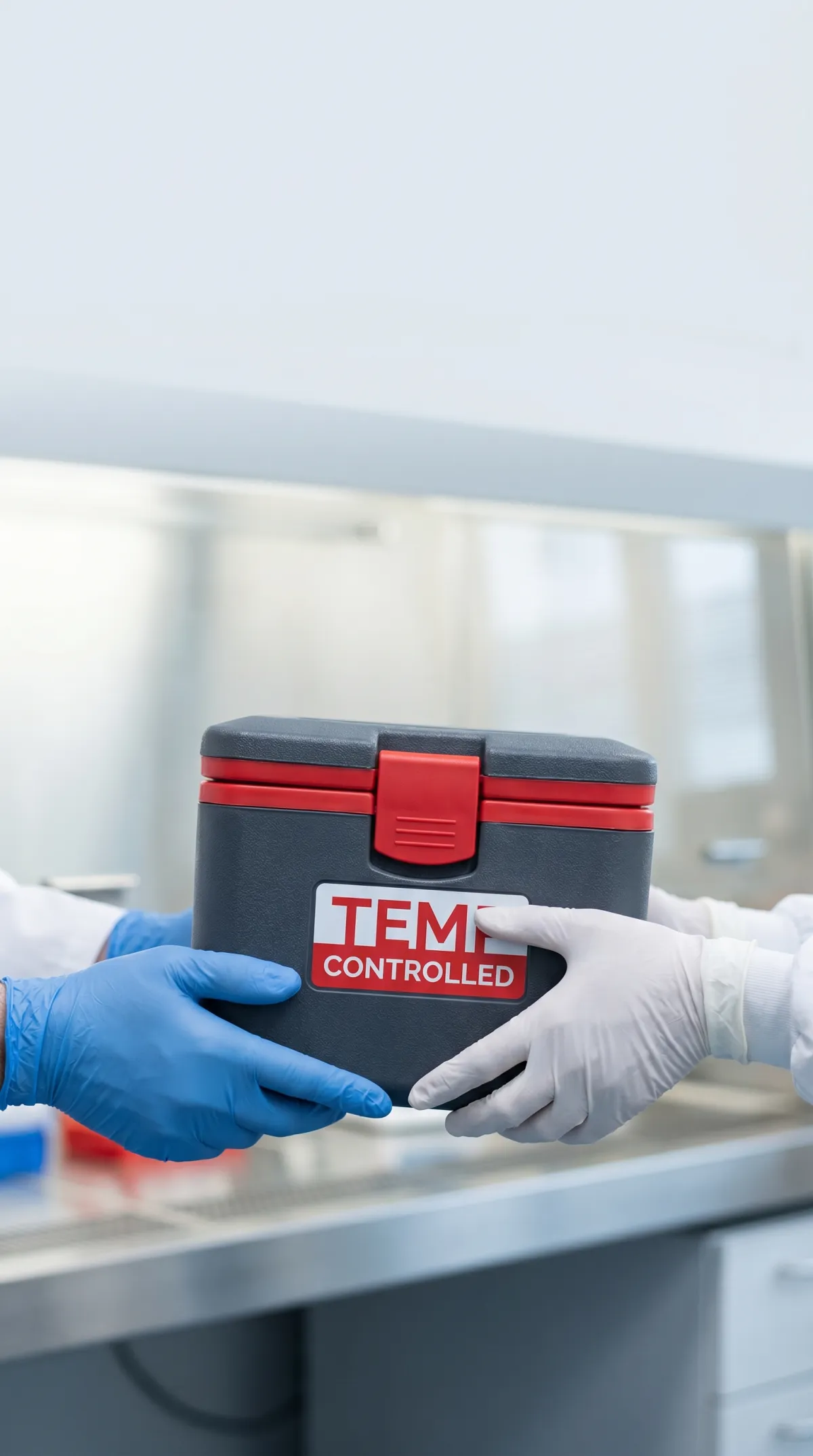
Temperature-controlled logistics for pharmaceutical delivery involves multiple technologies working in concert:
- Insulated packaging: Specialized containers with gel packs or phase-change materials maintaining target temperatures
- Data logging: Electronic temperature recorders documenting conditions throughout transit
- GPS tracking: Real-time location monitoring enabling rapid response to temperature excursions
- Validation: Regular testing confirming packaging systems reliably maintain temperatures across seasons
- Climate-controlled vehicles: For high-value or temperature-sensitive shipments, specialized vehicles with active temperature regulation
- Contingency protocols: Predefined procedures for responding to temperature excursions, including product salvage assessment
Even a brief temperature excursion—30 minutes above target range—can compromise product integrity. Modern pharmaceutical couriers employ real-time alerts enabling intervention before damage occurs. This infrastructure demands substantial capital investment and ongoing technical expertise.
Chain of Custody: Accountability from Source to Patient
Pharmaceutical supply chains are built on documented accountability. Every transfer—from manufacturer to distributor to pharmacy to patient—requires signed acknowledgment. This chain of custody serves multiple purposes:
- Security: Prevents medication diversion and counterfeit drug insertion into legitimate channels
- Liability: Identifies precisely who held custody when problems occur
- Recall management: Enables rapid, targeted product recalls when safety issues emerge
- Insurance: Provides documented evidence of proper handling for liability coverage
- Regulatory compliance: Demonstrates MHRA compliance during inspections
Proper chain of custody documentation requires sophisticated systems. Every courier interaction must be recorded with timestamps, temperatures, signatures, and location data. This level of documentation would be excessive for general parcels but is essential for pharmaceutical integrity.
Clinical Trial Logistics: Specialized Requirements
Clinical trial supply chains represent the most demanding pharmaceutical logistics application. Trial protocols often require rapid shipment of investigational medicines to trial sites, maintaining strict temperature conditions, guaranteeing delivery within narrow time windows, and providing complete documentation for regulatory audits.
Clinical trial courier services must support:
- Rapid turnaround: Site-specific delivery windows often measured in hours
- Weekend/holiday delivery: Trial schedules don't respect business hours
- Flexible quantity: Supporting both bulk shipments to sites and urgent replenishment deliveries
- Regulatory documentation: Generating reports meeting FDA, EMA, and MHRA audit requirements
- Secure handling: Preventing product loss or contamination that could invalidate trial data
- Confidentiality: Maintaining investigational compound identity and preventing information leakage
Contract Research Organizations (CROs) managing clinical trials require courier partners capable of integrating with trial timelines, supporting protocol adherence, and providing documentation satisfying regulators. This specialized market has driven significant growth in pharmaceutical same-day services.
Pharmaceutical Delivery You Can Trust
Maine Couriers provides GDP-compliant pharmaceutical delivery with chain of custody documentation and same-day capability. We support hospitals, pharmacies, and clinical trials across the UK.
Get Pharmaceutical SupportHospital and Pharmacy Delivery: Emergency Supply Chains
Hospital pharmacies operate under constant resource constraints. Emergency medication requirements—treatments for acute conditions, critical shortages, or clinical emergencies—demand rapid resupply from wholesale distributors. This last-mile pharmacy supply chain generates continuous same-day courier demand.
Hospital delivery services require understanding complex facility access procedures: security clearances, loading dock scheduling, cold storage protocols, and staff coordination. Professional pharmaceutical couriers maintain relationships with hospital pharmacy teams, streamlining delivery processes and supporting emergency supply networks.
Specialty pharmacies dispensing advanced treatments—oncology medications, biologics, antiretroviral therapies—require direct-to-patient delivery with temperature control and signature confirmation. These home-based treatment models create recurring same-day delivery demand from specialty pharmacy networks.
Regulatory Requirements and Industry Growth
Regulatory tightening has paradoxically accelerated demand for specialized pharmaceutical couriers. As the MHRA increases inspection frequency and audit scrutiny, pharmaceutical companies require documented evidence of compliant logistics. Non-compliant couriers create regulatory risk—making organizations choose specialized providers over cheaper alternatives.
This regulatory environment has driven market consolidation. General couriers without pharmaceutical expertise have exited the market. Specialized pharmaceutical logistics providers with GDP compliance, temperature systems, and regulatory expertise have expanded dramatically. Market research projects continued growth as:
- Clinical trial activity increases globally, driving UK trial supply chain demand
- Specialty pharmacies and home-delivery models expand
- Biologics represent growing medication categories requiring temperature control
- Regulatory requirements increase, eliminating non-compliant providers
Future Trends in Pharmaceutical Delivery
The pharmaceutical logistics landscape continues evolving. Emerging trends shaping the industry include increased demand for ultra-cold storage (below -20°C) supporting new vaccine and immunotherapy distribution, expansion of same-day delivery windows, growing patient expectations for home delivery convenience, and regulatory focus on supply chain security preventing counterfeit drugs.
Technology integration is accelerating—blockchain-based tracking systems providing immutable delivery records, IoT sensors enabling real-time temperature and location monitoring, and data analytics predicting supply chain disruptions. These technological advances create both opportunity and requirement for modern pharmaceutical couriers to remain competitive.
For healthcare organizations and pharmaceutical companies, the growth of specialized same-day delivery services represents a genuine competitive advantage. Rapid delivery of clinical trial supplies, emergency hospital resupply, and patient-centric specialty pharmacy distribution improve healthcare outcomes. Investing in reliable pharmaceutical logistics partners becomes a strategic healthcare decision, not merely a cost center.