
Sustainable Logistics: Reducing Your Carbon Footprint with Smart Delivery
Logistics and Environmental Impact
Courier and delivery services contribute significantly to UK carbon emissions. Billions of packages shipped annually require transportation, warehousing, and fuel consumption. For environmentally conscious UK businesses, the environmental impact of courier services is a legitimate concern. Fortunately, sustainable logistics choices can dramatically reduce supply chain carbon footprint while maintaining delivery reliability and often improving cost efficiency.
Sustainable logistics isn't just environmental responsibility—it's increasingly a business imperative. Consumers increasingly value companies with sustainable practices. Regulatory pressure on emissions continues mounting. Environmental considerations in business decisions influence not just company values but competitive positioning and customer loyalty.
The Carbon Footprint of Delivery
A single delivery contributes measurable carbon emissions. A package delivered via a diesel van emits CO2 as fuel is burned. Cumulative across thousands of shipments, delivery logistics represent substantial carbon impact. The average UK parcel delivery generates approximately 200-500 grams of CO2 equivalent, depending on distance and vehicle efficiency. For high-volume shippers, this accumulates to thousands of kilograms annually.
"Sustainable logistics isn't an environmental luxury. It's an operational necessity that reduces costs, meets customer expectations, and positions businesses for regulatory compliance in an increasingly carbon-conscious world."
Strategies for Reducing Delivery Carbon Footprint
Several strategies enable businesses to reduce supply chain carbon impact:
- Choosing couriers with electric or low-emission vehicle fleets
- Consolidating shipments to reduce vehicle trips and distance
- Optimising delivery routes to minimise travel distance
- Using local couriers for regional delivery rather than long-distance transport
- Selecting multi-drop delivery consolidating multiple packages on single vehicles
- Offsetting unavoidable emissions through carbon offset programmes
The most effective approach combines multiple strategies. Choosing an eco-conscious courier provides baseline emissions reduction. Consolidating shipments reduces vehicle trips. Optimised routing reduces distance. Together, these strategies can reduce delivery-related carbon by 30-50%.
Electric Vehicles in Courier Services
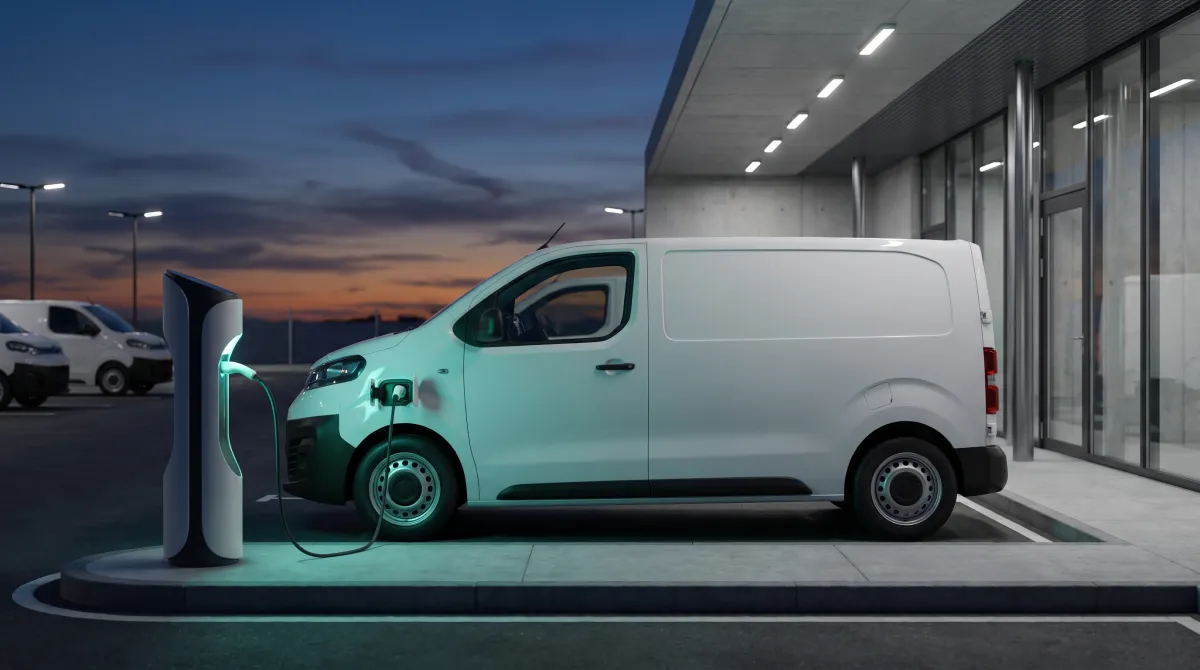
Electric vehicles produce zero tailpipe emissions, directly addressing delivery-related pollution. As EV technology improves and charging infrastructure expands, electric courier services become increasingly viable. For businesses capable of consolidating deliveries within EV range (100-250 miles), electric courier services provide superior environmental performance.
The environmental benefit increases further when electricity generation becomes cleaner. As the UK grid includes increasing renewable energy, electric vehicles deliver ever-greater environmental benefits. Businesses choosing EV couriers today invest in environmental solutions that improve over time as energy infrastructure decarbonises.
Optimised Delivery Routes and Consolidation
Route optimisation software dramatically reduces delivery-related carbon. By identifying the most efficient delivery sequences minimising travel distance, sophisticated routing reduces fuel consumption and emissions per delivery. Combined with delivery consolidation—combining multiple shipments on single routes—total carbon footprint decreases substantially.
Multi-drop delivery services specifically optimise for efficiency. A single vehicle visiting 20 delivery locations uses far less fuel per delivery than 20 individual vehicles each serving one location. This consolidation benefit provides both environmental and cost advantages.
Local Sourcing and Regional Delivery
Shortening delivery distances directly reduces carbon emissions. Businesses sourcing from regional suppliers rather than distant international sources reduce transport distance and carbon. For delivery logistics, selecting regional couriers for local delivery reduces long-distance transport. While full reshoring isn't practical, strategic decisions reducing average transport distance provide environmental benefit.
Carbon Offset Programmes
For unavoidable emissions—particularly long-distance or international deliveries—carbon offset programmes enable businesses to counterbalance environmental impact. Offsets fund environmental projects (reforestation, renewable energy) that reduce global atmospheric carbon. While offsets shouldn't replace emissions reduction efforts, they enable businesses to achieve carbon neutrality for remaining unavoidable emissions.
Measuring and Reporting Carbon Footprint
Tracking delivery-related carbon enables identifying reduction opportunities and measuring progress. Sophisticated logistics providers provide carbon reporting—data showing emissions from deliveries. This transparency enables businesses to understand their supply chain carbon impact, set reduction targets, and demonstrate progress to stakeholders.
Choose Sustainable Delivery With Maine Couriers
Maine Couriers is committed to sustainable logistics. Our growing electric vehicle fleet, optimised routing, multi-drop consolidation, and carbon reporting enable businesses to deliver efficiently while minimising environmental impact.
Discuss Sustainable Courier OptionsCustomer Expectations and Sustainable Delivery
Consumers increasingly demand sustainable businesses. 60%+ of consumers consider environmental impact in purchasing decisions. Offering sustainable delivery options becomes a competitive advantage. Businesses highlighting sustainable delivery practices attract environmentally conscious customers and differentiate from competitors.
Regulatory Compliance and Future-Proofing
Environmental regulations continue tightening. Ultra-low-emission zones in major cities restrict older diesel vehicles. Carbon pricing mechanisms increasingly penalise high-emission activities. Businesses investing now in sustainable logistics future-proof their operations against regulatory changes. Those delaying face adapting to regulations under pressure, potentially at higher cost.